
How to Read Betting Odds
Betting odds tell you two things at once: how much you can win and how likely the bookmaker thinks that outcome actually is. They’re shown in different formats depending on the platform or region, but underneath the formatting, every set of odds is answering the same two questions: what’s the payout, and what’s the implied chance of it happening?
This guide breaks down how to read betting odds in the three formats you’ll come across most decimal, fractional, and American — with simple examples for each, how to calculate your actual winnings, and the mistakes beginners make most often when odds first start looking like a foreign language.
Table of Contents
What Are Betting Odds?
Betting odds are a number (or a pair of numbers) that represent two things bundled together: the payout you’ll receive if a bet wins and the bookmaker’s implied estimate of how likely that outcome is.
Odds aren’t just a random price tag; they’re built from probability. A team seen as more likely to win will always carry shorter, lower-paying odds. A team seen as less likely will carry longer, higher-paying odds. Once you understand that relationship, every format below becomes a lot easier to read, because you’re not memorizing three unrelated number systems; you’re learning three different ways of expressing the same underlying probability.
Understanding odds matters because it directly shapes your decisions it tells you the risk you’re taking on relative to the reward on offer and helps you judge which bets are realistically more likely to land versus which ones are a long-shot payout play.
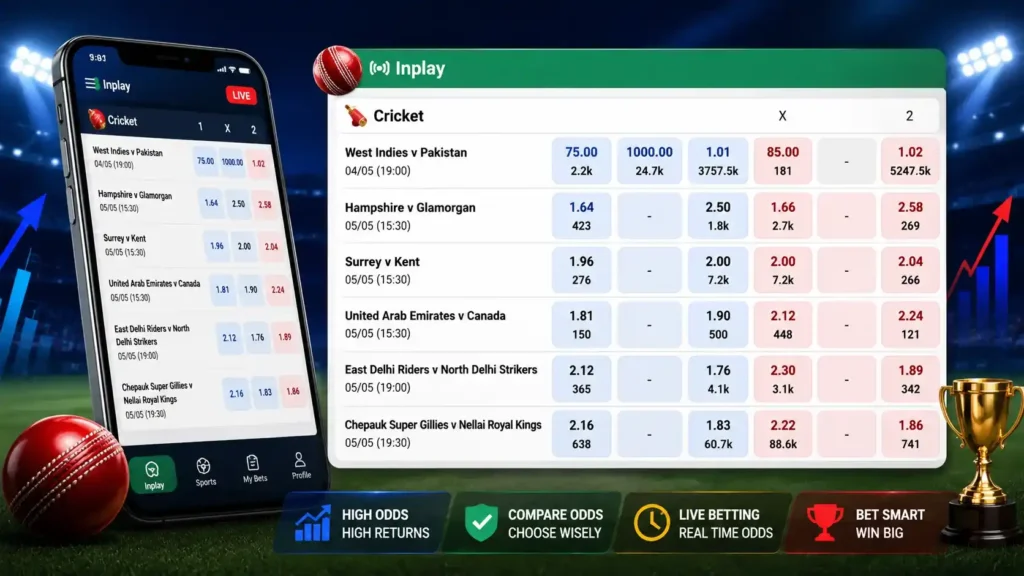
Types of Betting Odds
There are three main formats you’ll see across most sportsbooks:
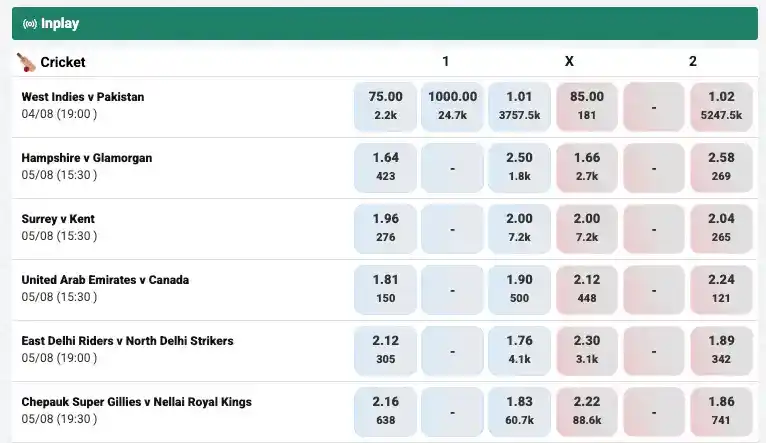
- Decimal odds common across Europe, Australia, and most online platforms, including Lotus365 Bet
- Fractional odds are traditional in UK horse racing and some cricket markets
- American (moneyline) odds standard on US sportsbooks
They all describe the same thing, just formatted differently. Once you’ve picked the format you’re most comfortable with, you can usually switch a platform’s display setting and use that one consistently.
How to Read Decimal Odds
Decimal odds are the simplest format to calculate with, because the number shown already represents your total return stake included not just your profit.
Formula: Stake × Decimal Odds = Total Return
Example: If the odds are 2.50 and you bet ₹100, your total return is ₹250. Your profit is ₹150, because the ₹100 stake is already included in that 2.50 figure.
This is one of the most beginner-friendly formats specifically because there’s no separate step to add your stakeback;k the number in front of you is the full picture.
How to Read Fractional Odds
Fractional odds show your profit relative to your stake, written as a fraction, and unlike decimal odds, your original stake is not included in the number itself.
Formula: Stake × Fraction = Profit (then add your stake back for total return)
Example: If the odds are 5/1 and you bet ₹100, you win ₹500 profit, plus your original ₹100 stake back all return of ₹600.
The fraction reads as “for every 1 unit staked, you win 5 units in profit.” Smaller fractions like 1/2 mean a smaller profit relative to your stake, which usually signals a more likely outcome.
How to Read American Odds
American, or moneyline, odds use a plus or minus sign in front of the number, and the sign changes what the number actually represents.
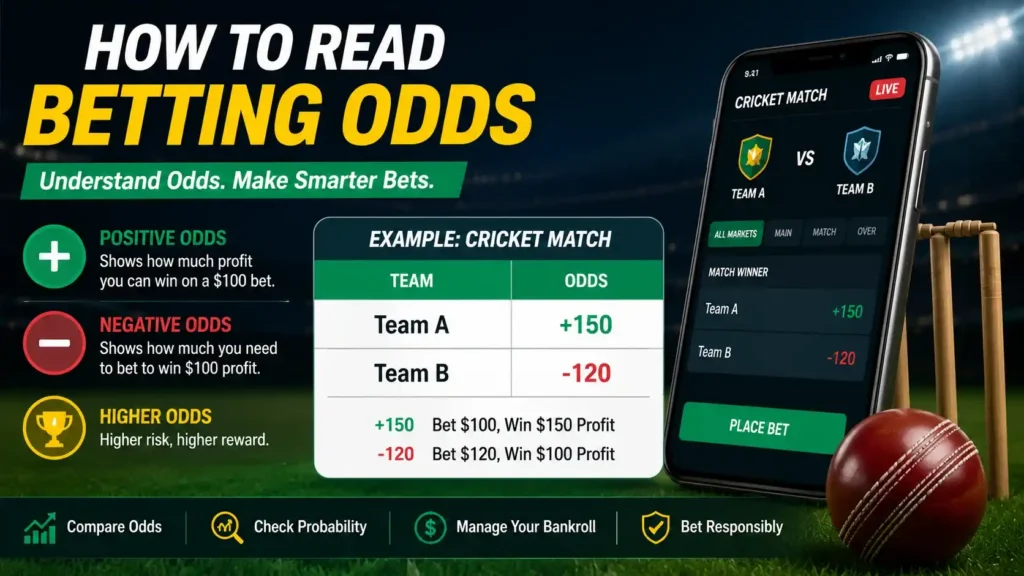
Positive odds (+): shows how much profit you’d win on a ₹100 stake. Negative odds (−): shows how much you’d need to stake to win ₹100 profit.
Example: If the odds are +150, a ₹100 bet wins a ₹150 profit. If the odds are −200, you need to bet ₹200 to win a ₹100 profit.
Positive numbers indicate the underdog (higher payout, lower probability); negative numbers indicate the favorite (lower payout, higher probability).
How to Calculate Winnings
Regardless of format, your actual winnings come down to two numbers: total return and profit. Mixing these two up is where most beginner confusion happens.
- Total return = everything you get back, including your original stake
- Profit = only the amount you gained, stake excluded
| Format | What the number shows | How to get total return |
|---|---|---|
| Decimal | Total return per 1 unit staked | Stake × odds |
| Fractional | Profit per stake | (Stake × fraction) + stake |
| American (+) | Profit per 100 staked | (Stake × odds/100) + stake |
| American ( −) | Stake needed per 100 profit | (Stake × 100/odds) + stake |
Once you’ve placed and settled a winning bet, your return is credited to your wallet see our withdrawal for how to move those funds out, or the deposit if you’re funding your account for the first time.
Odds vs. Probability
Odds and probability are two sides of the same coin shorter odds mean a higher implied chance of winning, while longer odds mean a lower implied chance but a bigger payout if it comes through.
A heavy favorite might carry decimal odds of 1.20, a high implied probability, but a small profit relative to your stake. A long-shot underdog might carry odds of 8.00, a low implied probability, but a much larger payout if it happens. Neither is “better” on its own; it depends on how confident you actually are in that outcome versus what the odds are paying you for taking the risk.
Common Mistakes Beginners Make
Confusing total return with profit. This is the single most common error — assuming decimal odds of 2.50 mean you “win 2.50 times your stake in profit,” when it actually means your total return is 2.50 times your stake, with profit being only the amount above your original bet.
Not checking whether the stake is included. Decimal odds include your stake in the headline number; fractional and American odds generally don’t. Applying the wrong mental formula to the wrong format is where most beginner miscalculations come from.
Comparing formats without converting first. 2.50 decimal, 3/2 fractional, and +150 American can all represent different actual values—always convert to one format before comparing two odds side by side.
Ignoring the platform’s terms on settlement. Void bets, cash-out rules, and how odds are settled if a match is abandoned all vary—it’s worth a quick read of the Lotus365 Terms & Conditions before relying on a specific payout figure.
Which Format Is Easiest for Beginners?
For most beginners, decimal odds are the easiest starting point, because the number shown is already your total return there’s no second calculation step to add your stake back in. If you’re new to reading odds, switching your display format to decimal (most platforms, including the Lotus365 app, let you change this in settings) removes one whole layer of mental math while you get comfortable.
Read Betting Odds
What do betting odds actually mean?
Betting odds show two things together: how much you’ll be paid if a bet wins and the bookmaker’s implied estimate of how likely that outcome is. Shorter odds mean a higher implied probability; longer odds mean a lower probability but a bigger payout.
Which odds format is easiest for beginners?
Decimal odds are generally considered the easiest, since the number shown already represents your total return with the stake included; no extra calculation is needed.
How do I calculate my winnings from decimal odds?
Multiply your stake by the decimal odds to get your total return. Subtract your original stake from that number to find your actual profit.
Are fractional and decimal odds the same value?
They can represent the same probability, just formatted differently. Fractional odds show profit only, while decimal odds show total return including your stake; converting between them requires adding or removing your stake from the calculation.
What’s the difference between +150 and -150 in American odds?
+150 means a ₹100 bet wins a ₹150 profit. -150 means you’d need to bet ₹150 to win a ₹100 profit. The sign indicates whether you’re backing the underdog (+) or the favorite (−).
Do shorter odds always mean a safer bet?
Shorter odds mean a higher implied probability according to the bookmaker, but “safer” still depends on your own read of the match odds reflecting the market’s estimate, not a guarantee.